Reykjanes Volcano Eruption Tours — Current Status & Safety
Reykjanes volcano eruption tours explained: the 2021–2025 eruption timeline, the current June 2026 status, what you'll actually see, and how guided tours keep you safe.
For four years the Reykjanes Peninsula has been the most-watched volcanic stage on Earth, and “will I see lava?” is the first question every visitor asks. The honest answer changes month to month — so this guide gives you the eruption timeline, the current status as of June 2026, what you can realistically expect to see, and why a guided eruption tour is the safest way to get close. (Conditions are volatile; always treat the official channels below as the final word.)
The Reykjanes Reawakening: A Short Timeline
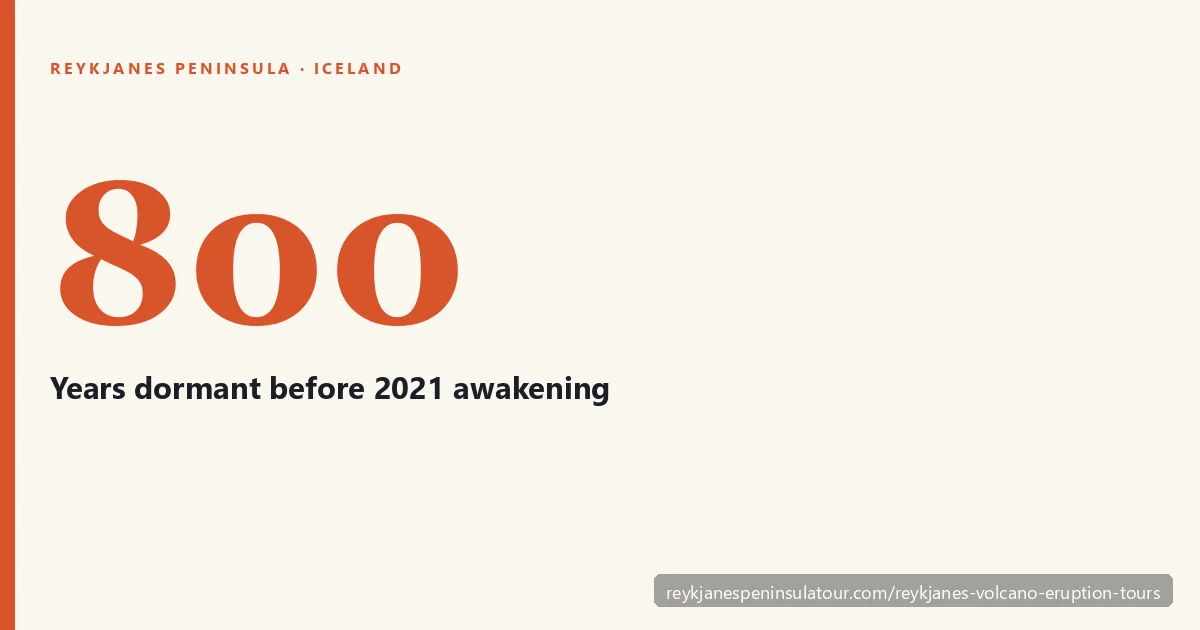
After roughly 800 years of slumber, the peninsula woke up in 2021. The activity has come in two phases:
| Period | Where | What happened |
|---|---|---|
| 2021, 2022, 2023 | Fagradalsfjall | Three tourist-friendly eruptions with fountaining lava |
| Dec 2023 – Aug 2025 | Sundhnúkur crater row (near Grindavík) | A sequence of short, powerful eruptions; Grindavík evacuated |
The shift from Fagradalsfjall to the Sundhnúkur crater row near the town of Grindavík in December 2023 was the serious turn — the ground cracked open and the town was evacuated. A run of brief but intense eruptions followed, the most recent of which began on 16 July 2025 and ended in early August 2025.
What’s Happening Right Now (June 2026)
As of June 2026, no lava is flowing. But the system is far from dormant. The Icelandic Meteorological Office (IMO) reports that magma is again pooling beneath the Svartsengi area, with ground uplift continuing month after month. Scientists widely expect this episodic activity to carry on for years, possibly decades, and the IMO’s view is that a fresh eruption along the Sundhnúkur row is among the most likely scenarios in the coming weeks.
The critical planning fact: warning times are short — potentially as little as twenty minutes to a few hours. That is exactly why visiting with a monitored operator matters. Tour companies track the official hazard assessment every single day and adjust the route to the safest open viewpoint — or substitute sites entirely — rather than guessing.
A Word on “See Live Lava” Promises
Treat any guarantee of active lava with caution. Whether a vent is erupting on the specific day you travel depends entirely on nature, and no operator can promise it. What you are reliably booking is access to a freshly transformed volcanic landscape: lava fields only a year or two old, where the rock can still be warm underfoot, the ground may still steam, and the moss has not yet returned. That is dramatic in its own right — and it’s there whether or not a vent is active.
What You’ll See on an Eruption-Site Hike
The featured full-day tour hikes toward the recent eruption areas near Fagradalsfjall and Meradalir — often around two hours each way over uneven young lava — and the exact route is chosen on the day for safety. Beyond the flows, eruption tours usually fold in the Bridge Between Continents, the boiling mud of Gunnuhver, the geothermal boardwalks at Krýsuvík / Seltún, and Lake Kleifarvatn, all within the Reykjanes UNESCO Global Geopark.
Choosing an Eruption Tour
| Tour | From | Rating | Walking |
|---|---|---|---|
| Afternoon hike to the volcano site | $119 | 4.4/5 (936) | Moderate, half-day |
| Full-day volcano + Reykjanes hike (featured) | $132 | 4.6/5 (1,137) | Moderate-to-hard (around 2 hrs each way) |
| Fagradalsfjall small-group hike | $152 | 5.0/5 (534) | Moderate-to-hard |
| Super Jeep volcano shuttle | $124 | 4.5/5 (67) | Less walking, rough-terrain access |
The featured tour ($132, 4.6/5 from 1,137+ travellers) is the most-booked balance of access and value. If you want the smallest group and the highest rating, the Fagradalsfjall small-group hike ($152, a perfect 5.0/5) is the premium pick; if your fitness is limited, the Super Jeep gets you closer with less hiking.
Staying Safe
This is a live volcanic area, so the rules are simple and non-negotiable:
- Check the official channels — the Icelandic Met Office (vedur.is) and safetravel.is — close to your travel date and on the morning of your tour.
- Never enter a marked closed zone. Reputable operators never do.
- Go guided if you can. A guide reads the daily hazard map and makes the safety calls that are genuinely hard to make alone.
- Expect changes. Weather or volcanic conditions can force a reroute or, occasionally, a cancellation. Because the tours here include free cancellation (typically up to 24 hours before), you can rebook or refund if plans change.
Ready to Book?
Iceland’s youngest landscape is extraordinary even between eruptions — and a guided tour means the monitoring, routing and safety are handled for you. See the featured Reykjanes eruption-site tour (from $132, rated 4.6/5 by 1,137+ travellers) and check live availability.
See Iceland's Youngest Lava — From Reykjavík
Join 1,137+ travellers who rated this Reykjanes Peninsula tour 4.6/5. Eruption sites, the Mid-Atlantic Ridge, Gunnuhver hot springs, and round-trip transfer from Reykjavík — all with free cancellation.
Check Availability & Book